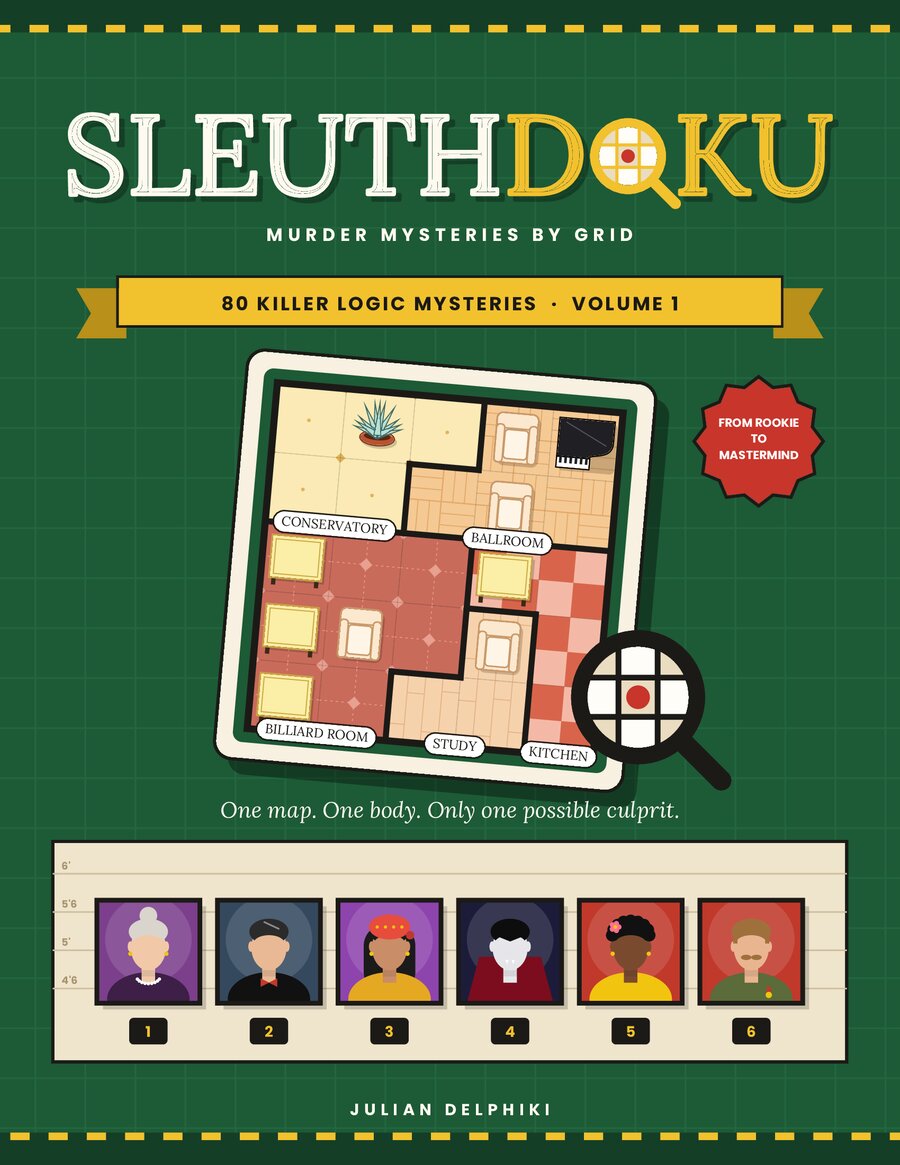
Sleuthdoku Volume 1 is where the whole series begins. It holds 80 killer logic mysteries, 24 recurring suspects and one coffee machine that has not worked since 1987. If you have never solved a murder grid, this is the book we recommend first.
This review is part of our guide to the best logic puzzle books. Below, we look at what is inside, who it suits and how the difficulty grows.
What is inside Sleuthdoku Volume 1
The book opens like a police file. First, Chief Inspector Hazel Hawkshaw welcomes you to the SLEUTHDOKU Division. Then come the rules, a detective’s dictionary and a training case at Pudding Hall. After that, you meet the Usual Suspects, with portraits and one-line reputations.
The 80 cases follow in four chapters:
- Rookie, cases 1 to 20, on small 4×4 and 5×5 maps.
- Sleuth, cases 21 to 40, with bigger maps and sneakier witnesses.
- Inspector, cases 41 to 60, where clues only make sense together.
- Mastermind, cases 61 to 80, which are not for the faint of heart.
Finally, the solutions explain every case, and a certificate waits for anyone who closes all 80 files.
Who Sleuthdoku Volume 1 suits
The early cases are gentle enough for curious beginners. Meanwhile, the last chapter will keep sudoku veterans busy. In other words, one book covers a long learning curve. That is rare, and it is the main reason we suggest it first.
Families also enjoy it. One person reads the clues aloud, while another marks the map. However, if your solvers are under twelve, Sleuthdoku Junior may be a better start.
The settings and the humour
The crime scenes are affectionate send-ups of classic mystery fiction and film. For example, Case 2 is called Murder on the Occident Express, and Case 5 is The Hound of the Haskervilles. From a rain-soaked roadside motel to a snowbound luxury train, the tone stays playful.
As a result, the book never feels grim. People die, of course, but nobody lingers on it. The focus stays on the logic.
How the difficulty grows
Each chapter adds one new idea. Early clues mostly name rooms and rows. Later, relative clues appear, such as “next to” or “diagonally next to”. By the Mastermind chapter, you will sometimes need to test a square in pencil. Every case, however, was checked by computer for exactly one solution, so logic always wins.
Our verdict
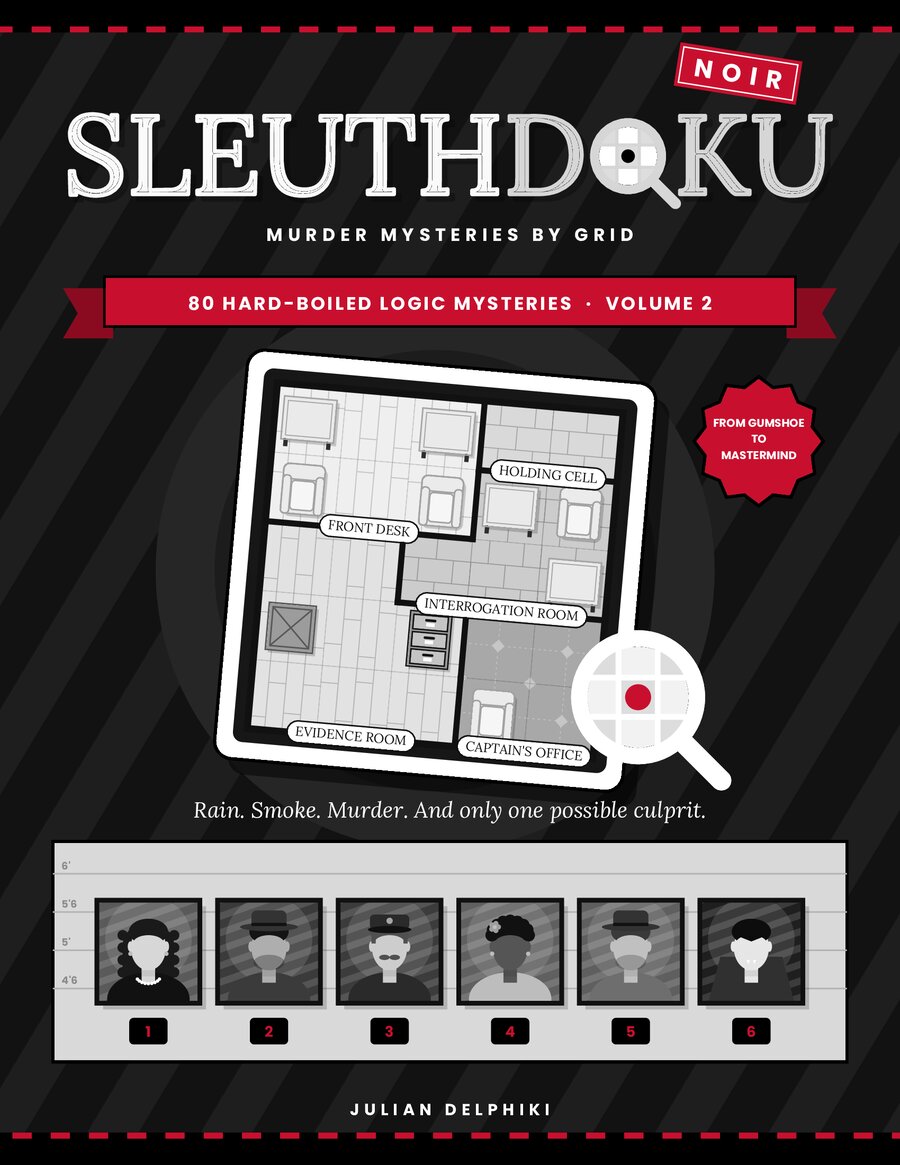
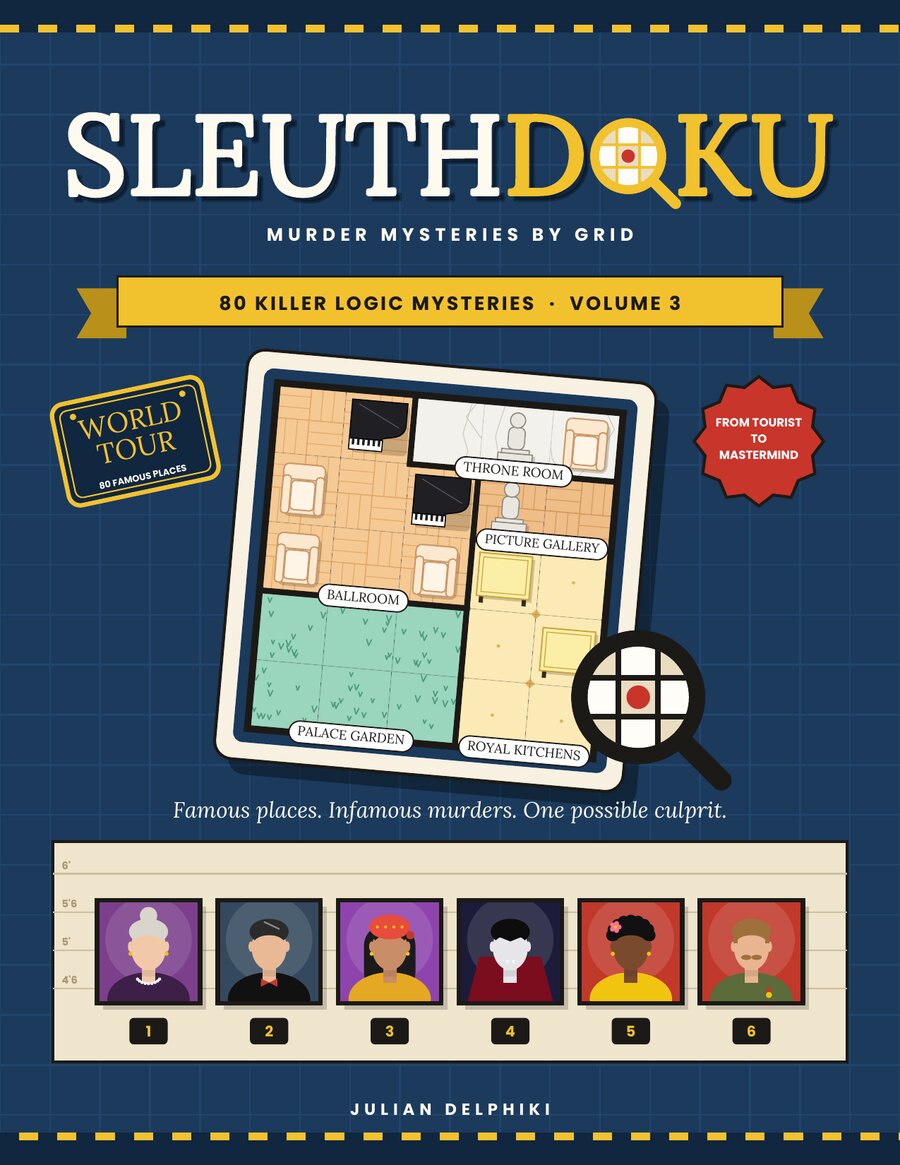
If you want one book to learn the format, buy the first Sleuthdoku casebook. Then continue with Sleuthdoku Noir for a darker mood, or the World Tour for famous places.
Not ready to buy? Try the free case on our how-to-play page first. It comes from the same book. For more on the genre, the whodunit tradition explains where these closed-circle mysteries come from.