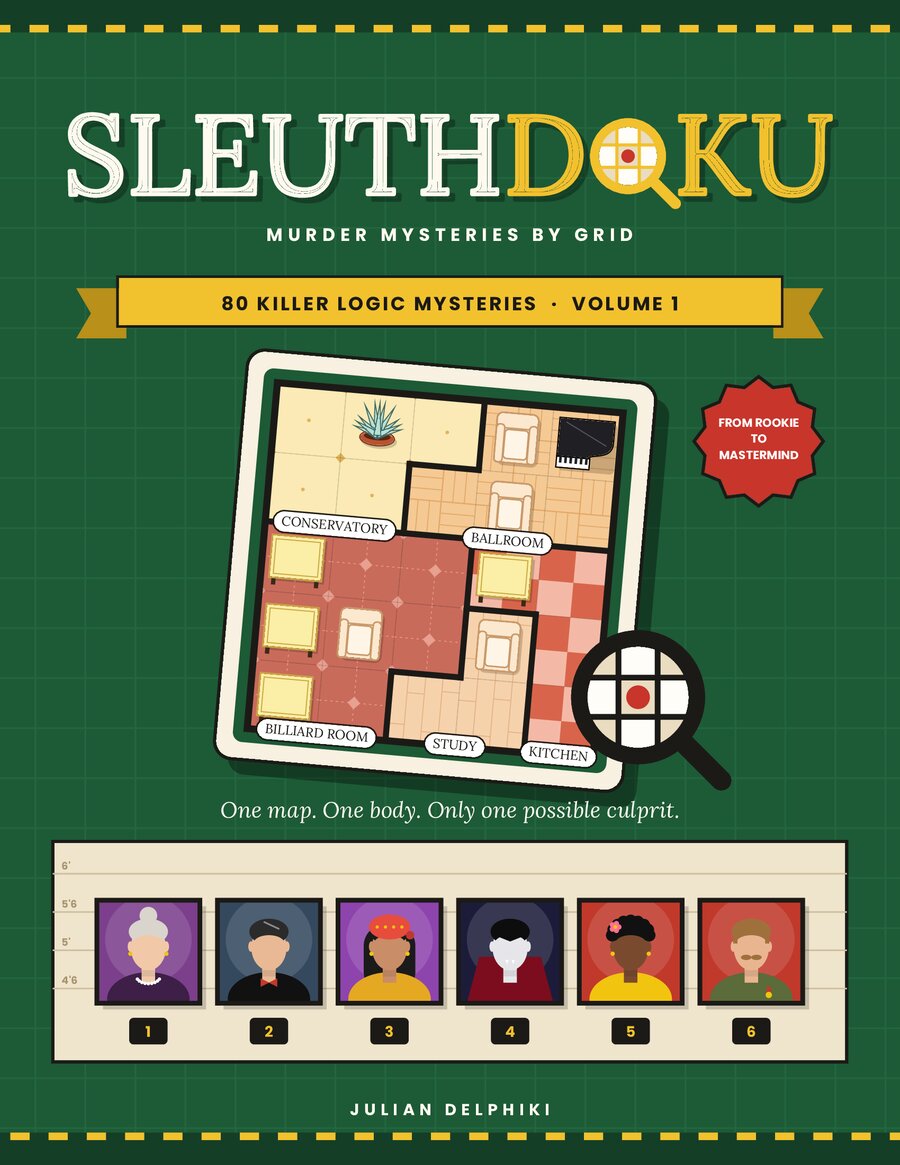
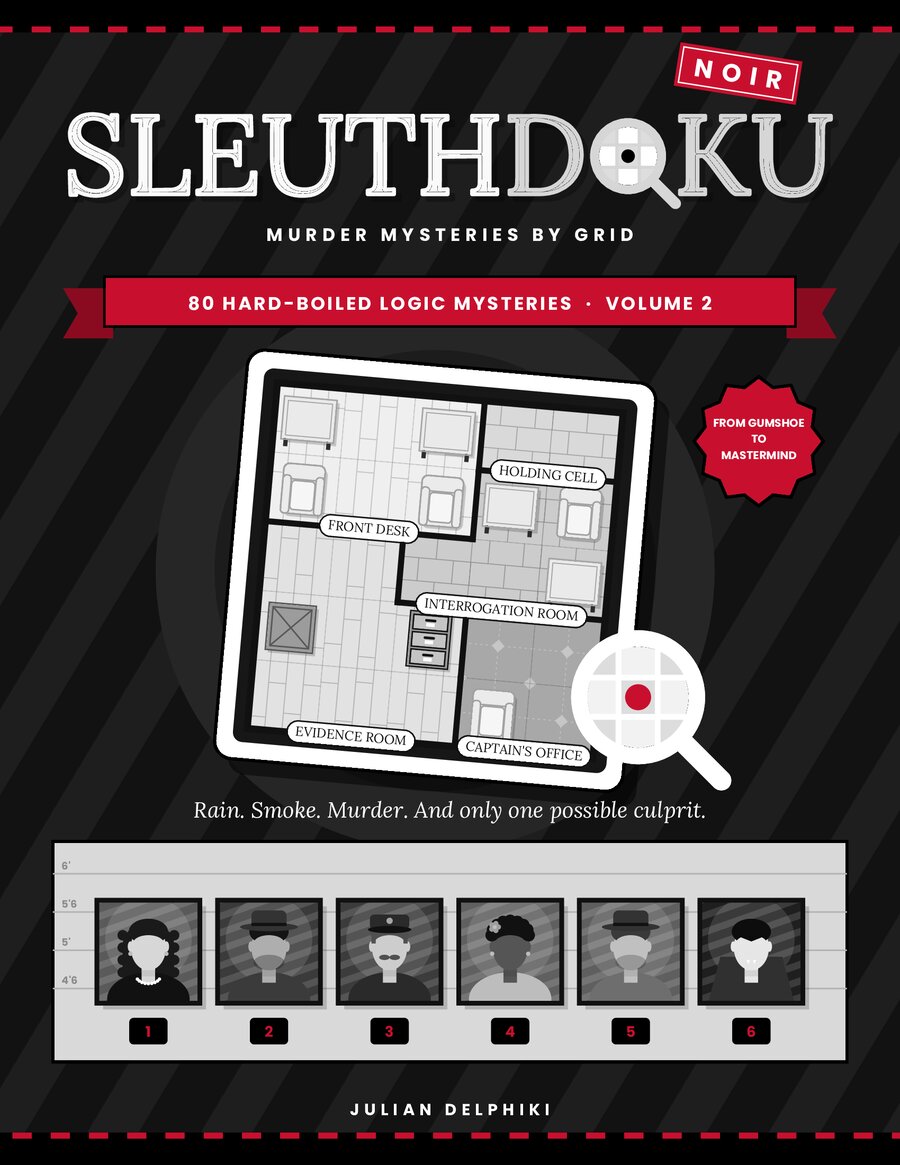
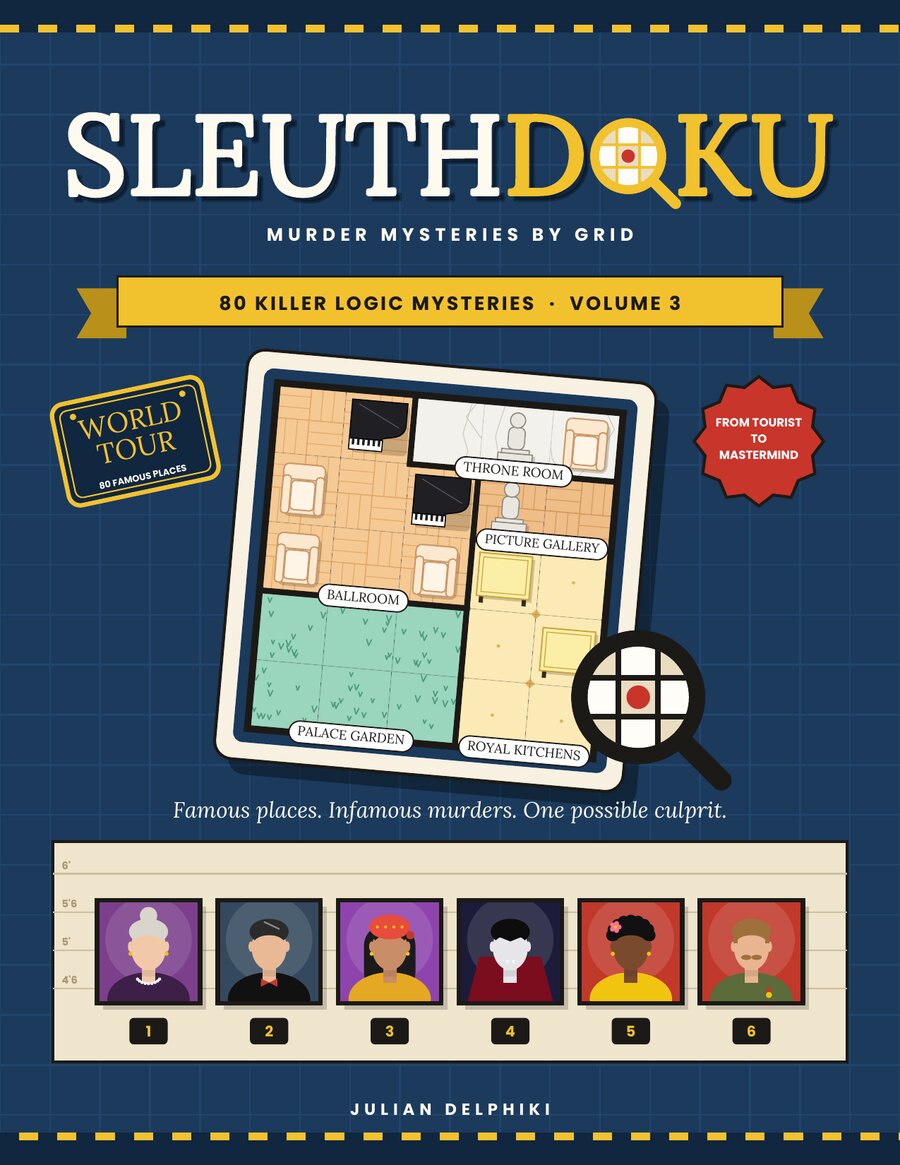
A murder grid looks simple at first. It is a square map, split into rooms, with a few pieces of furniture. Yet every line on it carries information. Once you know how to read it, the culprit is never far away.
In this post, we take the board apart piece by piece. If you are new, read our introduction to murder sudoku first, then come back here.
The parts of a murder grid
Every case in the Sleuthdoku books uses the same building blocks:
- Rows and columns. Rows are numbered from the top, while columns use letters from the left.
- Rooms. Thick black walls split the map into areas such as the kitchen or the study.
- Floor types. Bare floor, rugs and armchairs are free squares.
- Furniture. Tables, plants, beds, pianos and statues block squares completely.
- People. There is always one person per row, so a 5×5 map holds five people.
In other words, the grid already tells you a lot before you read any clue. For example, a room with only two free squares can hold two people at most.
How the rows and columns work
The first rule is the sudoku rule. Each row and each column holds exactly one person. Therefore, as soon as you place someone, their whole row and column close to everyone else.
That sounds small, but it snowballs. On a 4×4 map, two placements can close half the board. As a result, the last people often fall into place on their own.
Why rooms matter so much
Rooms give the clues their meaning. A witness might say “the chef was in the kitchen”. Instead of 25 squares, you now have three or four. Moreover, rooms decide the ending. The culprit is the only person who was alone in a room with the victim.
So while you solve, keep one eye on the walls. A room with exactly two people inside, one of them the victim, is your crime scene.
Furniture: the silent clue
Furniture never speaks, yet it shapes every murder grid. A square with a piano is simply gone. Similarly, a row full of tables might leave only one legal square. Experienced solvers cross out blocked squares before reading the first clue, and we explain why in our murder sudoku tips.
Armchairs and rugs, by contrast, are special. You can stand or sit on them, and clues often mention them. For instance, “the major was sitting in an armchair” points at a handful of squares.
Reading a murder grid like a detective
Here is a quick routine you can use on any case:
- Count the people and check the map size.
- Cross out every blocked square.
- Note rooms with very few free squares.
- Read the clues and start with the most direct one.
- After each placement, close the row and the column.
This routine works on every level, from the gentle Rookie files in Sleuthdoku Volume 1 to the moody black-and-white maps of Sleuthdoku Noir.
Where the idea comes from
The row-and-column rule comes from the Latin square, a structure mathematicians studied long before sudoku. The rooms and walls, meanwhile, come from the country-house mystery. Put them together and you get a board that is both a puzzle and a crime scene.
If you want to see a full map in action, try the free case on our how-to-play page. Then pick up World Tour for eighty maps set in famous places around the globe.