Grid puzzles are the quiet giants of the puzzle world. You probably know sudoku. Yet there are dozens of other formats, and each one trains a slightly different kind of logic. This guide maps the family, so you can find your next favourite.
We will also show where murder sudoku fits in. After all, it is the newest member of the clan.
What makes grid puzzles different
Most puzzles test knowledge. A crossword, for example, needs vocabulary. Grid puzzles, by contrast, need nothing but the rules on the page. Every answer follows from logic alone.
In addition, good grid puzzles have exactly one solution. That means you never need to guess. If you feel stuck, there is always a deduction waiting somewhere on the board.
The main families
To keep things simple, we group them by what you place:
- Number placement: sudoku, kakuro and futoshiki ask you to place digits under constraints.
- Shading: nonograms, star battle and binairo ask you to colour cells.
- Line drawing: slitherlink and hashi ask you to draw loops or bridges.
- Matching: classic logic grid puzzles ask you to link people with houses, pets or drinks.
- People placement: murder sudoku asks you to place suspects on a floor plan.
Each family has its own rhythm. For instance, shading puzzles feel visual, while matching puzzles feel verbal.
Which grid puzzles to try first
If you already solve sudoku, start with futoshiki or kakuro. They feel familiar, yet they add a new twist. On the other hand, if you prefer stories, go straight to murder sudoku. The rules are just as small as sudoku’s, but every solution reveals a culprit.
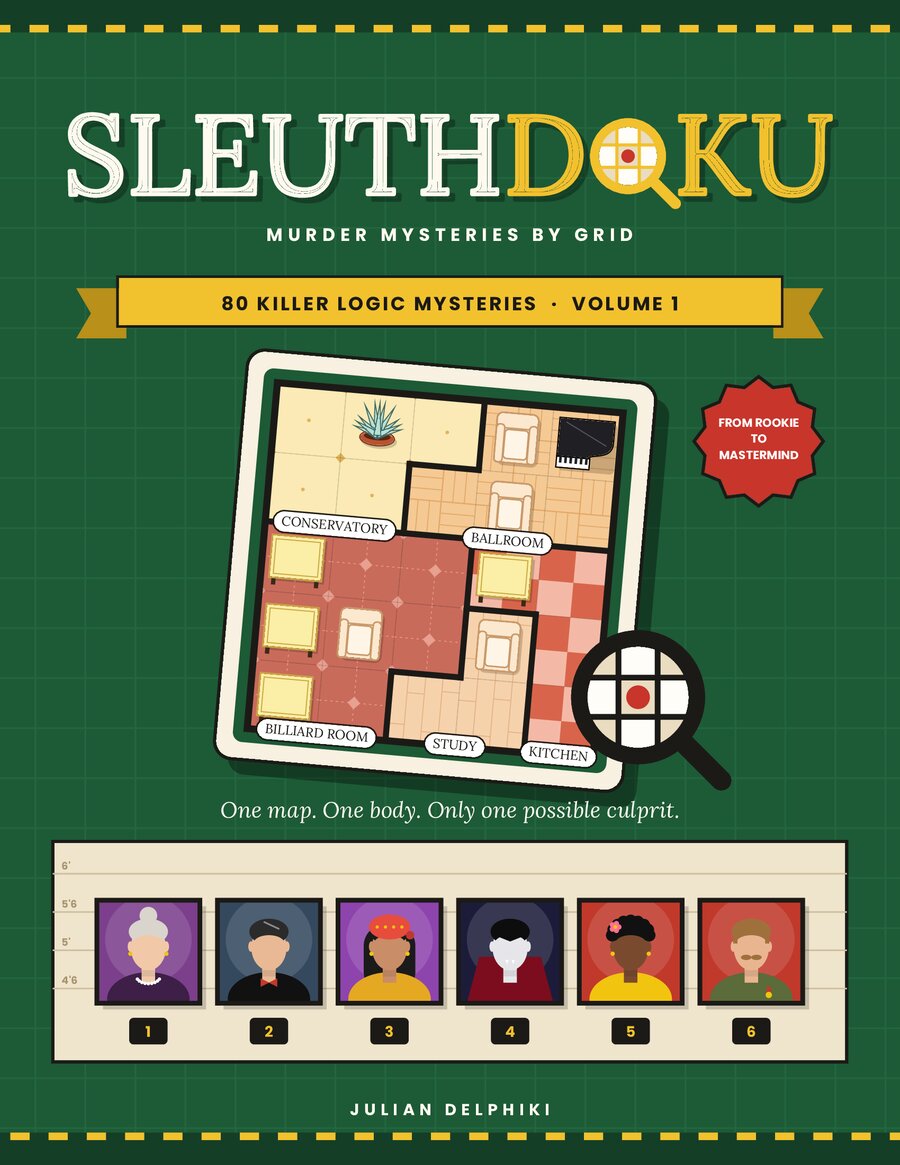
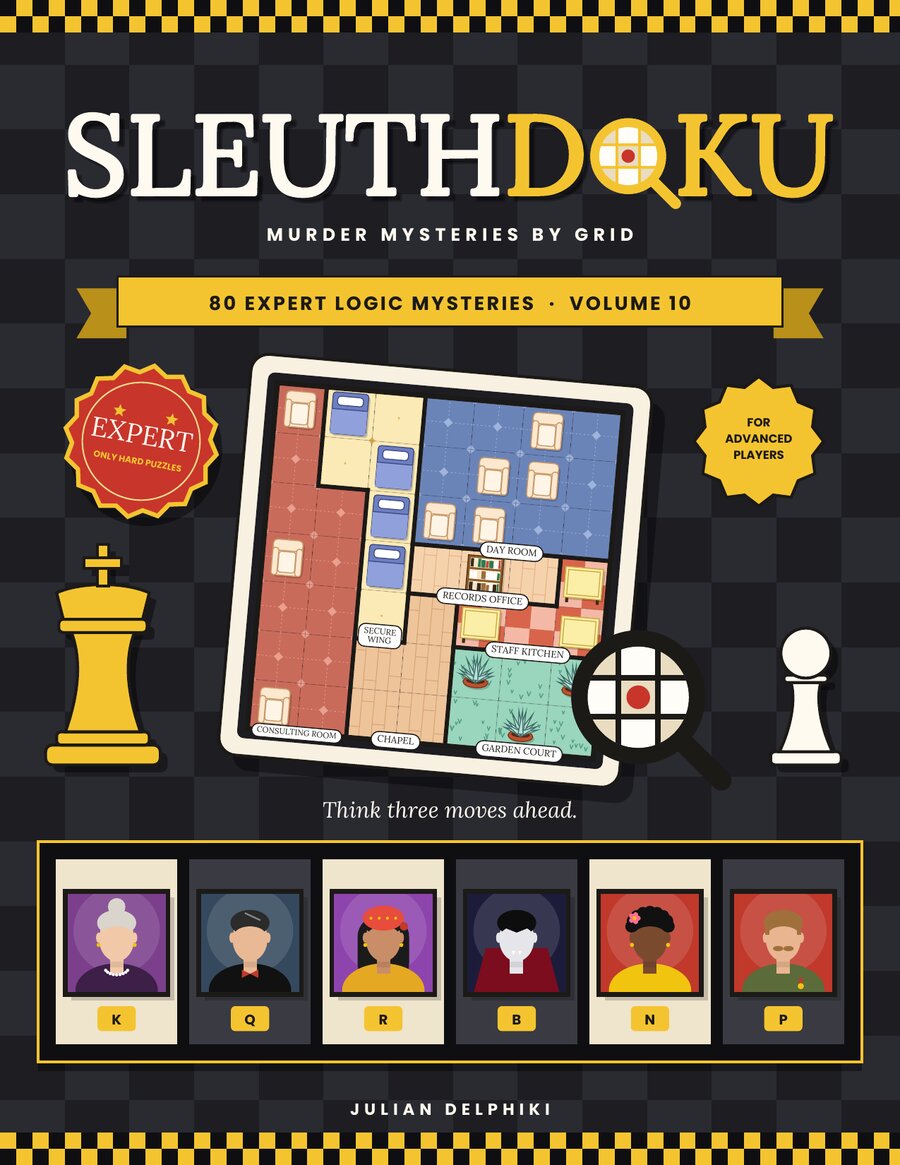
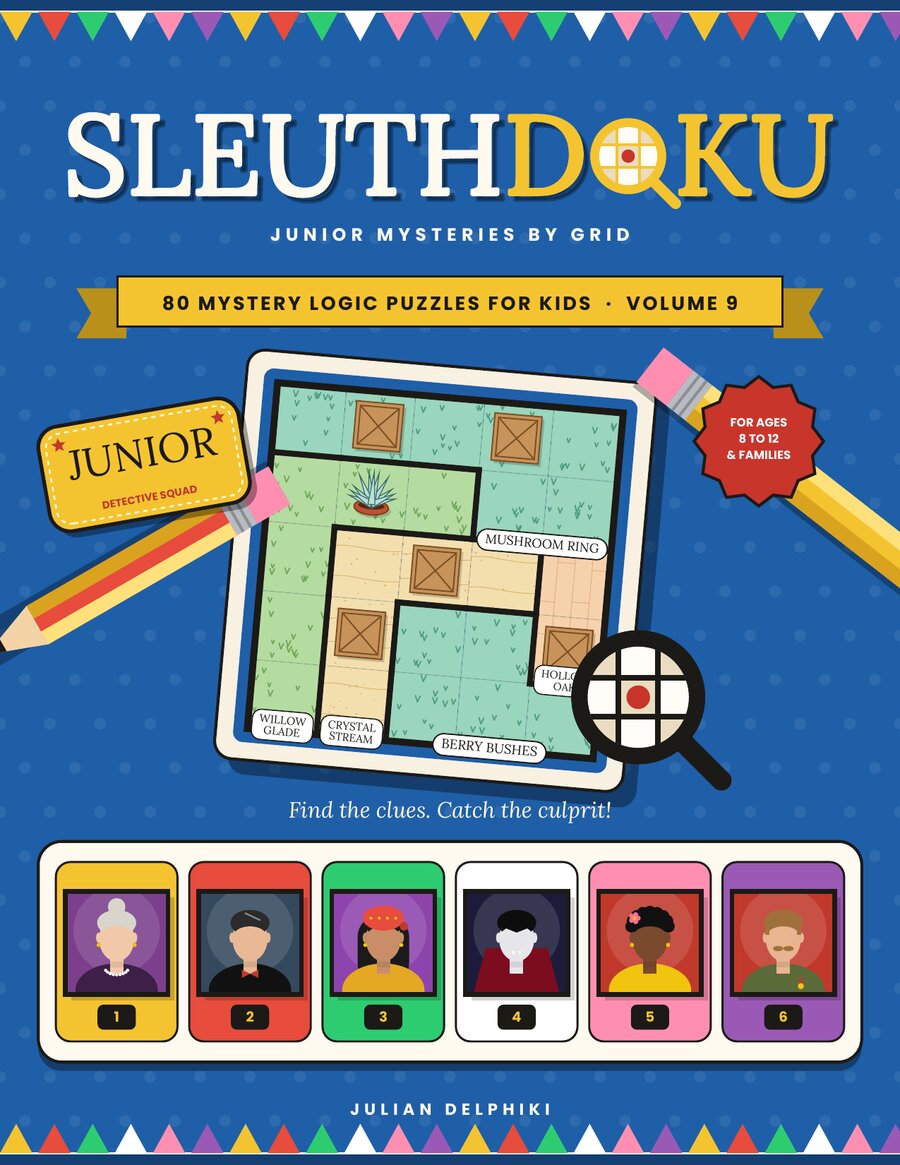
For a gentle start, Sleuthdoku Volume 1 opens with tiny 4×4 maps. Families can try Sleuthdoku Junior, where nothing worse than a missing trophy happens. Meanwhile, experts who want a challenge should open Sleuthdoku Mastermind.
Why they keep you hooked
There is a reason these puzzles last. First, each solve gives a small reward, because a grid always resolves. Second, you can feel yourself getting better. Patterns that once took ten minutes soon take ten seconds.
Moreover, grid puzzles are portable. A pencil and a page are enough. That is why they fill train rides, waiting rooms and lazy Sunday mornings all over the world.
A short history
Number grids are older than most people think. Mathematicians studied Latin squares long before sudoku became a newspaper staple. Later, puzzle publishers in the United States and Japan turned those ideas into the formats we know today.
Murder sudoku is simply the latest step. It takes the Latin square, adds walls and furniture, and then hides a killer inside.
Over the coming months, we will cover every type in depth, with rules, examples and tips. Each article will appear in the list below as soon as it is live.
In this series
- Logic Grid Puzzles: How the Classic Zebra Puzzle Works
- Sudoku Rules Explained: The Simple Grid That Conquered the World