Logic grid puzzles are the grandparents of modern deduction games. You get a short story, a list of categories and a handful of clues. Then you fill a grid of ticks and crosses until every person matches every detail.
This guide is part of our grid puzzles series. We explain the format, show a simple method and compare it with the murder grids in Sleuthdoku.
What logic grid puzzles look like
A typical puzzle has three or four categories. For example: five people, five houses, five pets and five drinks. Each item matches exactly one item in every other category. The clues then say things like “the Spaniard owns the dog” or “the coffee drinker lives in the green house”.
The most famous example is the Zebra Puzzle. It is often credited to Einstein, although there is no evidence he wrote it.
How to solve logic grid puzzles
The classic method uses a matrix. Each category meets every other one in a block of small squares. Then:
- Mark a cross when a clue rules out a pairing.
- Mark a tick when a clue confirms one.
- After every tick, cross out the rest of that row and column in the block.
- Transfer what you learn between blocks.
The last step is where the magic happens. For instance, if the Spaniard owns the dog, and the dog owner drinks tea, then the Spaniard drinks tea too.
Logic grid puzzles vs murder grids
Both formats rely on the same rule: one match per row and column. However, they feel very different. Logic grids are abstract tables. Murder grids, by contrast, are floor plans you can picture. In a murder grid, “next to” means a real square on a real map.
As a result, many solvers find murder grids easier to start and harder to master. The spatial clues add new kinds of deduction, especially on big maps.
Tips for faster solving
First, read every clue once before marking anything. Second, start with direct pairings, since they give instant ticks. Third, watch for clues that mention order, like “left of” or “next to”. Those often unlock the hardest step. Finally, never guess. If you are stuck, a clue is waiting to be reread.
Where to go next
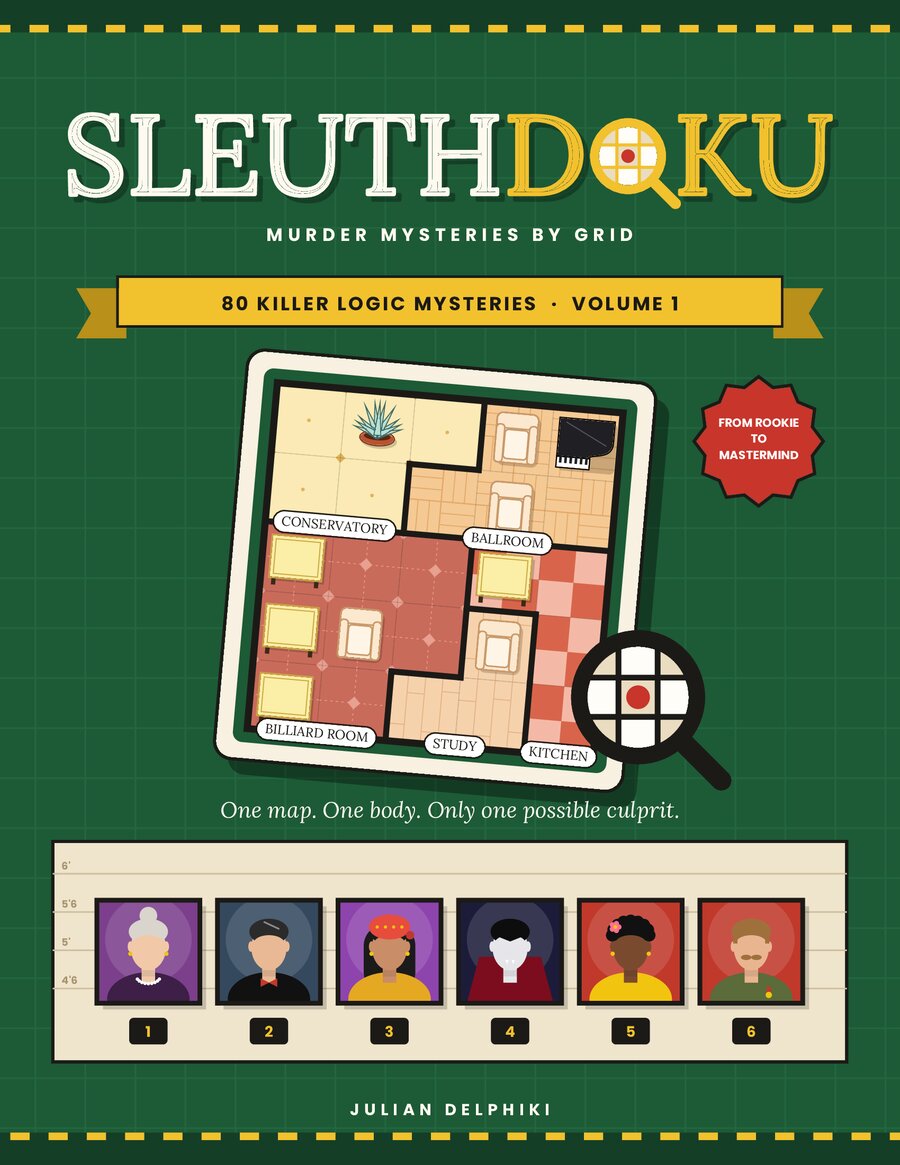
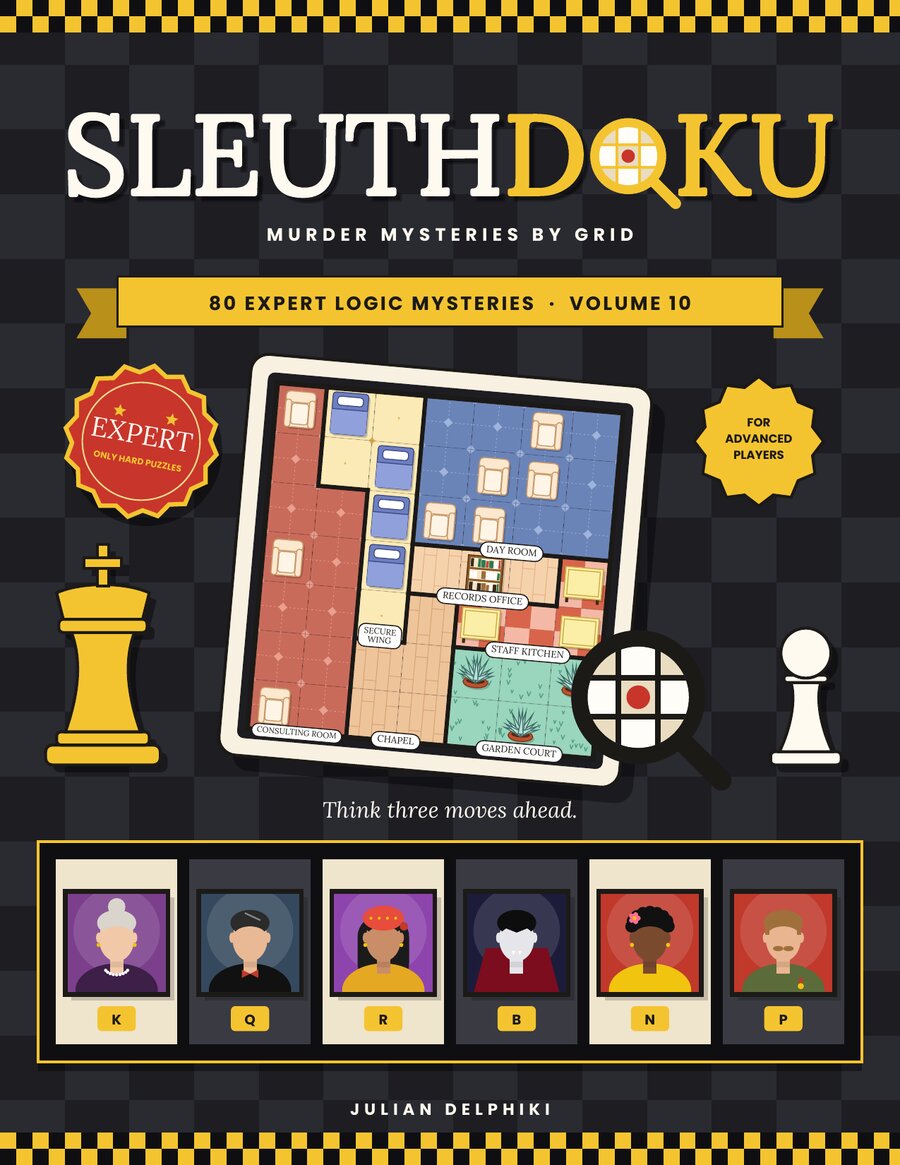
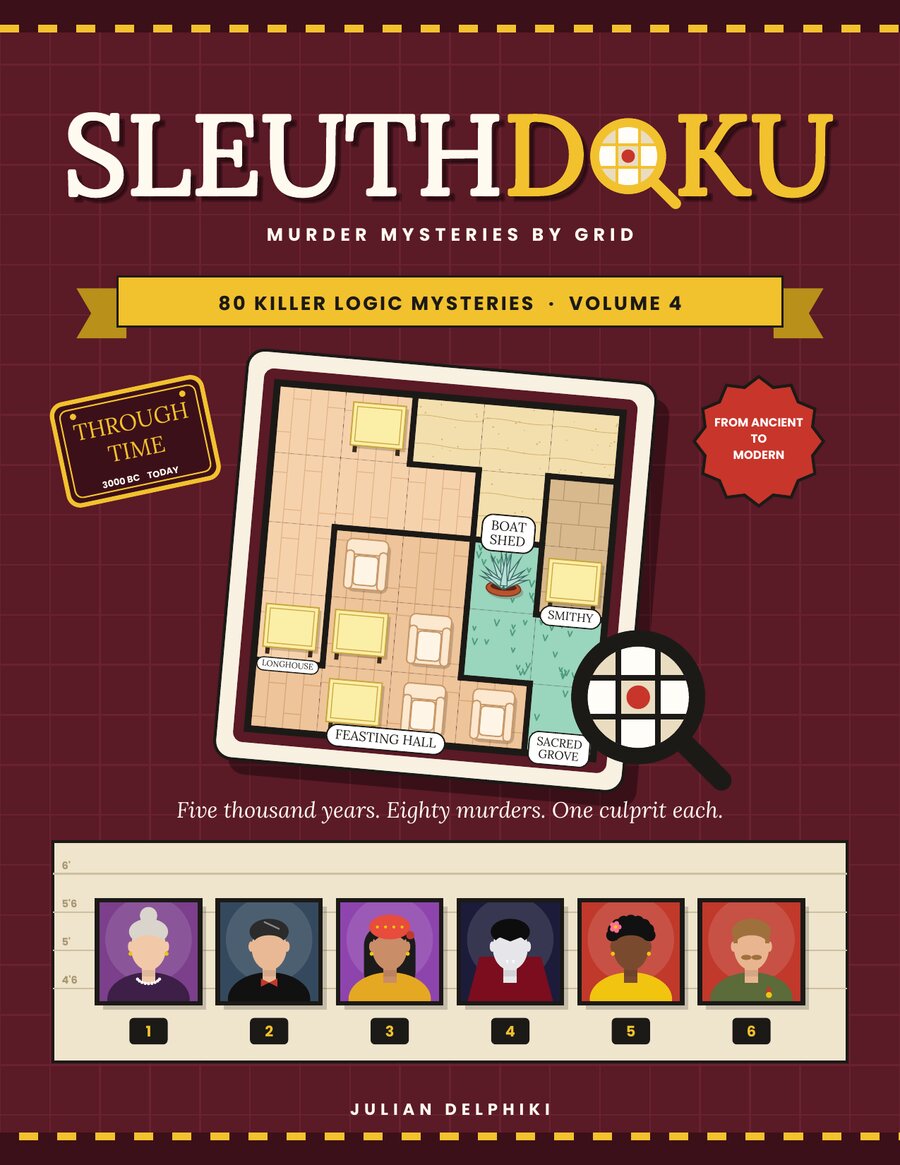
If you enjoy logic grid puzzles, try placing people on a map instead. Sleuthdoku Volume 1 starts with tiny 4×4 floor plans. History fans may prefer Through Time, with cases from ancient Athens to Cold War Berlin. Meanwhile, Sleuthdoku Mastermind offers expert boards with minimal clues.
You can also try a full case for free on our how-to-play page. It takes about ten minutes, and the butler is involved.