A murder sudoku is a logic puzzle with a crime scene drawn on the grid. First, you place every suspect on a floor plan. Then the witness statements narrow things down. Finally, the culprit reveals themselves. There is no guessing at all, because every case has exactly one solution.
In this guide, we explain where the idea comes from and how the rules work. We also show why so many sudoku fans fall for it. By the end, you will be ready to crack your first case.
Where the murder sudoku idea comes from
Classic sudoku asks you to place numbers so that each row and each column holds every digit once. That structure is called a Latin square, and mathematicians have studied it for centuries. Whodunits, on the other hand, ask a different question: who did it?
A murder sudoku joins the two. Instead of digits, you place people. Instead of a blank grid, you get a floor plan with rooms, walls and furniture. As a result, the logic feels familiar, yet every solution tells a little story.
The four rules of a murder sudoku
The rules fit on a napkin. In fact, the Sleuthdoku books print them on a single page:
- One per row, one per column. Every row and every column holds exactly one person, victim included.
- Mind the furniture. People can stand on bare floor, sit in an armchair or stand on a rug. However, nobody can stand on a table, plant, bed or piano.
- Follow the clues. Each witness statement helps you place someone.
- Find the culprit. The killer is the only person who was alone in a room with the victim.
That last rule is the twist. Because rooms are separated by thick walls, the grid finally answers the big question. Once everyone is in place, you simply look for the room that holds the victim and exactly one other person.
A tiny case solved in four steps
Let us take a tiny 4×4 case. Imagine four people: the victim, the butler, a baroness and a major. The clues say the major sits in an armchair in column B. They also say the butler is in the parlour, in column D.
First, cross out every square with a table or a piano. Next, look for the only armchair in column B and place the major there. That closes his row and his column. Then place the butler in the single parlour square left in column D. After that, the baroness has only one armchair available. Finally, the victim drops into the last free square, inside the parlour, alone with the butler.
So the butler did it. After all these years, of course he did. If you want to try a real case, the free Case 01 on our how-to-play page uses exactly these steps.
Why puzzle fans love it
There are three good reasons. To begin with, the rules are tiny, so anyone can start in minutes. Secondly, difficulty grows naturally: a 4×4 map is gentle, while a 7×7 map with few clues is brutal. Thirdly, the story gives every solve a payoff. You are not just filling a grid; you are catching someone.
In addition, there is no maths and no trivia. Logic is the only tool you need. That is why the format works for kids, for families and for veteran solvers alike.
How to start with murder sudoku books
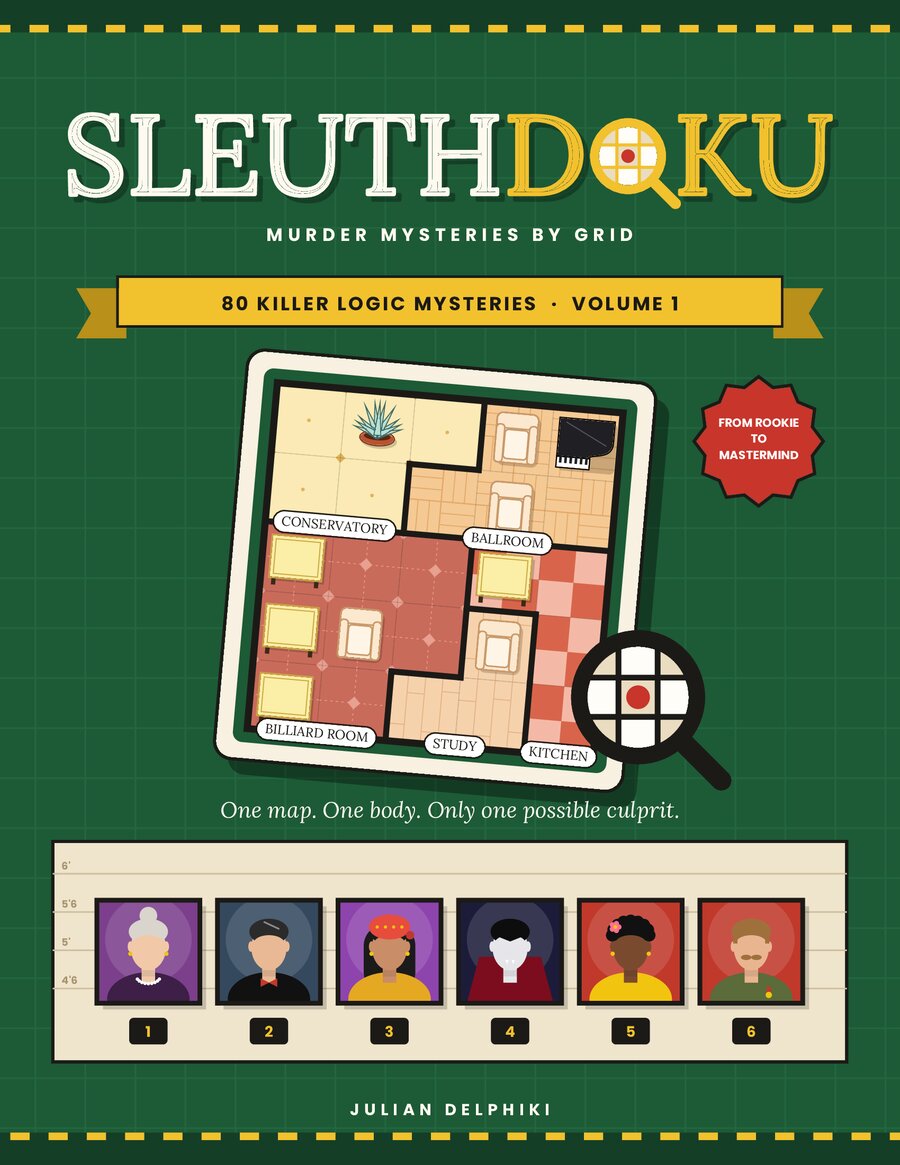
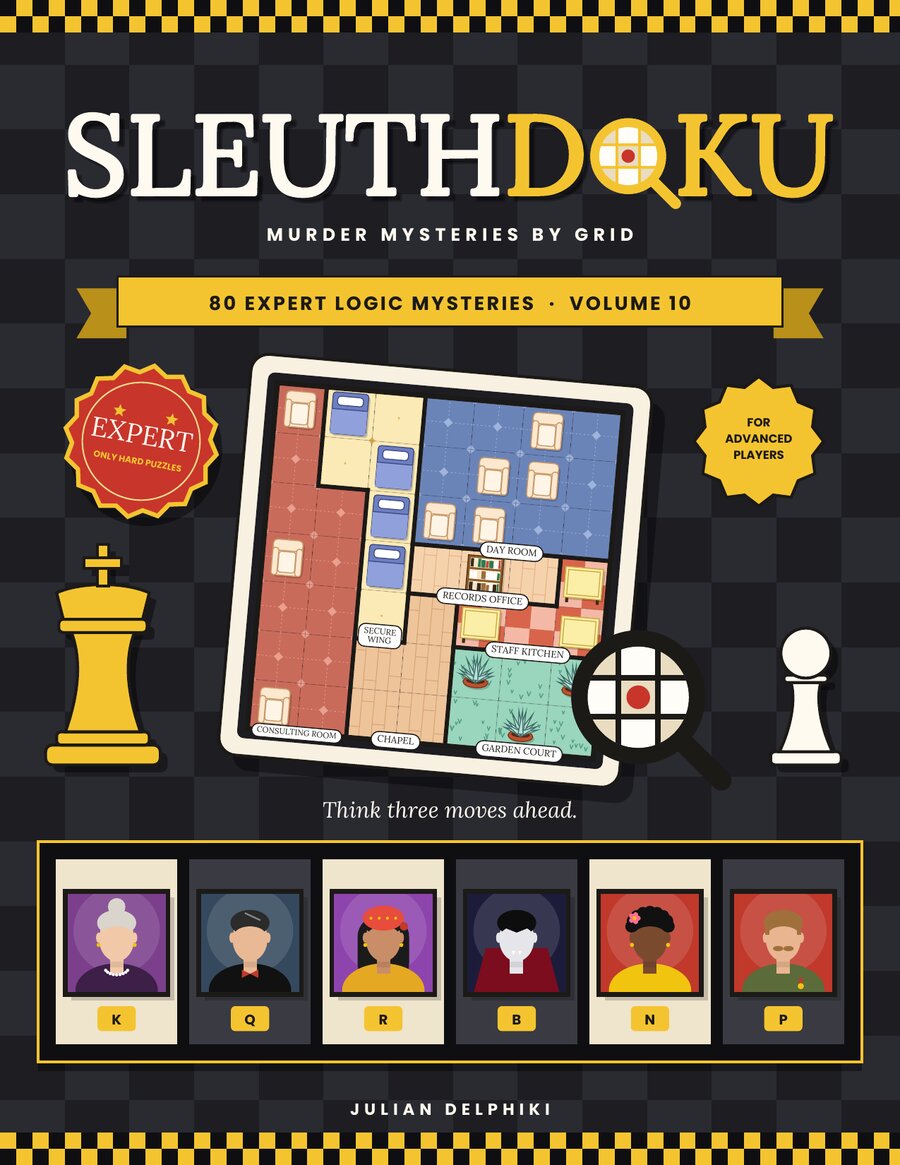
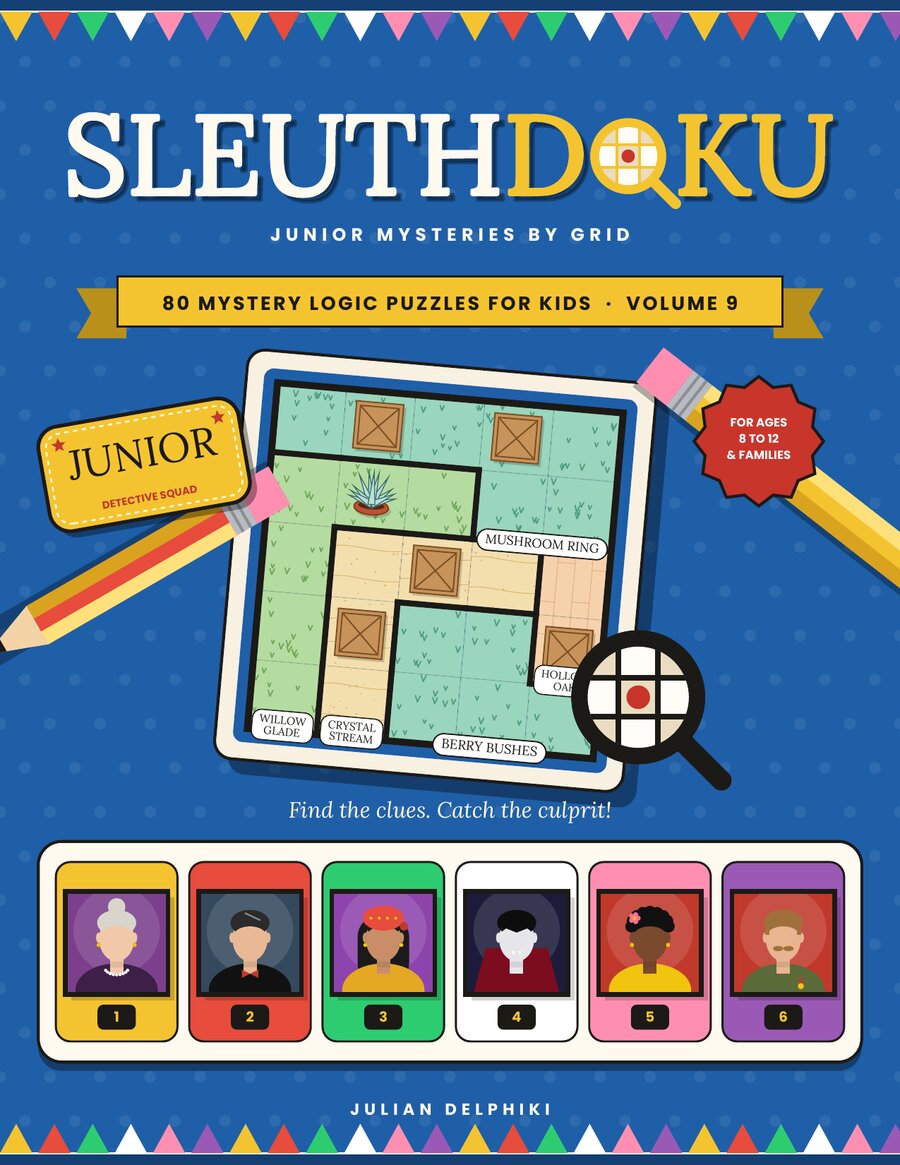
If you are new, begin with small maps and direct clues. Sleuthdoku Volume 1 opens with Rookie files on 4×4 grids and climbs slowly to Mastermind. For younger detectives, Sleuthdoku Junior swaps murders for missing trophies and hamsters. Meanwhile, expert solvers can jump straight to Sleuthdoku Mastermind, where every board is 6×6 or larger.
Over the coming weeks, this blog will dig into every rule, every clue word and every suspect. Below, you will find each article in this series as it goes live.
In this series
- How a Murder Grid Works: Rows, Rooms and One Lonely Victim
- The Detective’s Dictionary: Every Logic Puzzle Clue Explained
- Alone With the Victim: The Rule That Reveals Every Culprit