The first tip on our list sounds almost too simple: cross out blocked squares before you do anything else. Yet this one habit separates calm solvers from frustrated ones. It costs ten seconds, and it saves minutes on every case.
This article is part of our series on ten murder sudoku tips. Here, we look at why furniture matters and how to mark it quickly.
What counts as a blocked square
In Sleuthdoku, people can stand on bare floor, sit in an armchair or stand on a rug. However, nobody can stand on a table, plant, bookshelf, bed, bathtub, crate, piano or statue. Those squares are simply not available.
So every piece of solid furniture is a little gift. It removes an option before you read a single word. In addition, it often creates patterns you would otherwise miss.
Why you should cross out blocked squares first
There are three good reasons.
First, your eyes stop wandering. When you scan a row for free squares, a cross is easier to ignore than a drawing of a piano. Second, you spot forced moves sooner. A row with four tables on a 5×5 map has only one free square left. Third, room clues become sharper. A kitchen that looks like six squares might really be two.
As a result, the first two or three placements often appear before you touch the clues at all.
How to cross out blocked squares quickly
Use a light pencil and a small diagonal line. Do not shade the whole square; you still want to see the room labels. Then work row by row, from top to bottom, so you never miss one.
Some solvers prefer dots for free squares instead. That works too. However, a single cross per blocked square is faster on big maps.
A worked example
Imagine a 4×4 map with a piano across B1 and B2 and two tables in A1 and A2. After you cross out blocked squares, rows 1 and 2 each have only two free squares, both in columns C and D. Now read the clue “the butler was in column D”. Suddenly, the butler is in row 1 or row 2, column D, and nothing else.
That is the power of the habit. You have not solved the case yet, but the board is half as big as it looked.
Practise on easy maps first
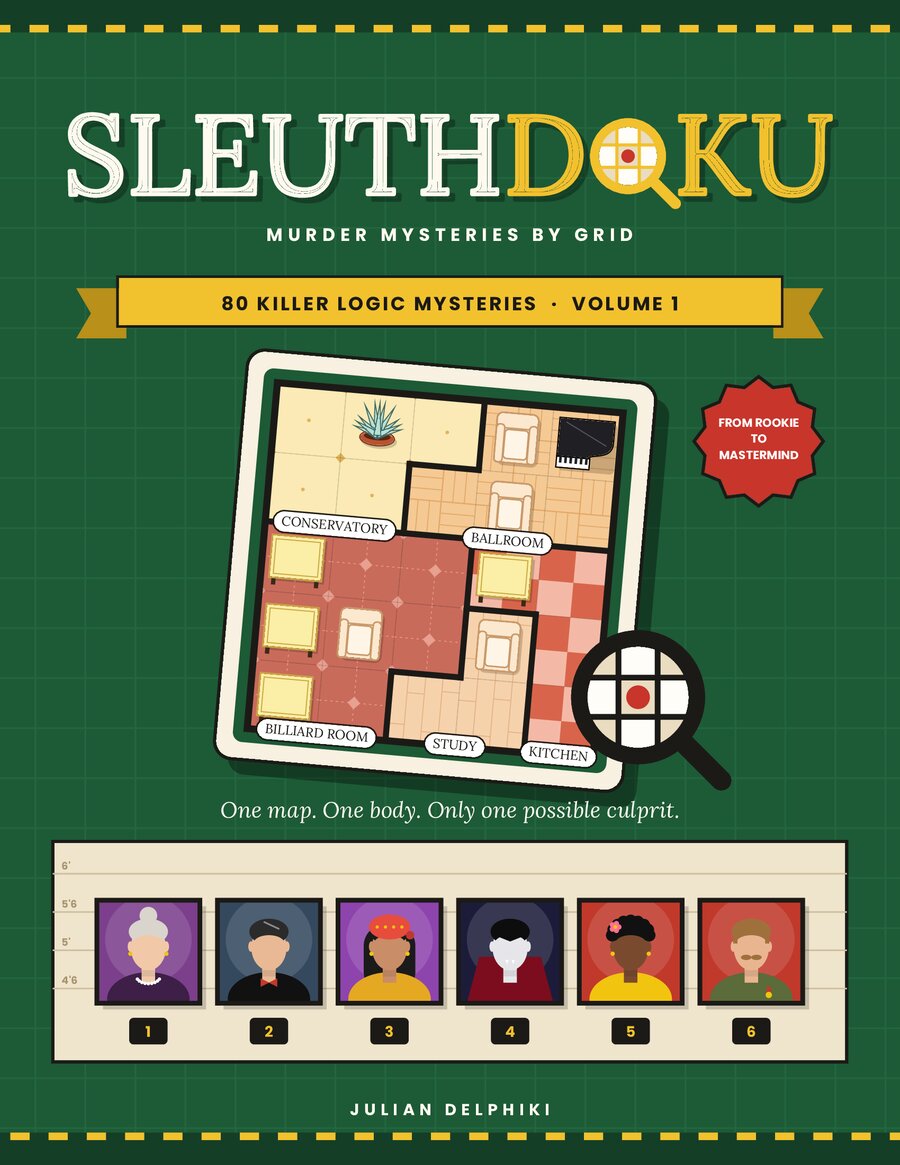
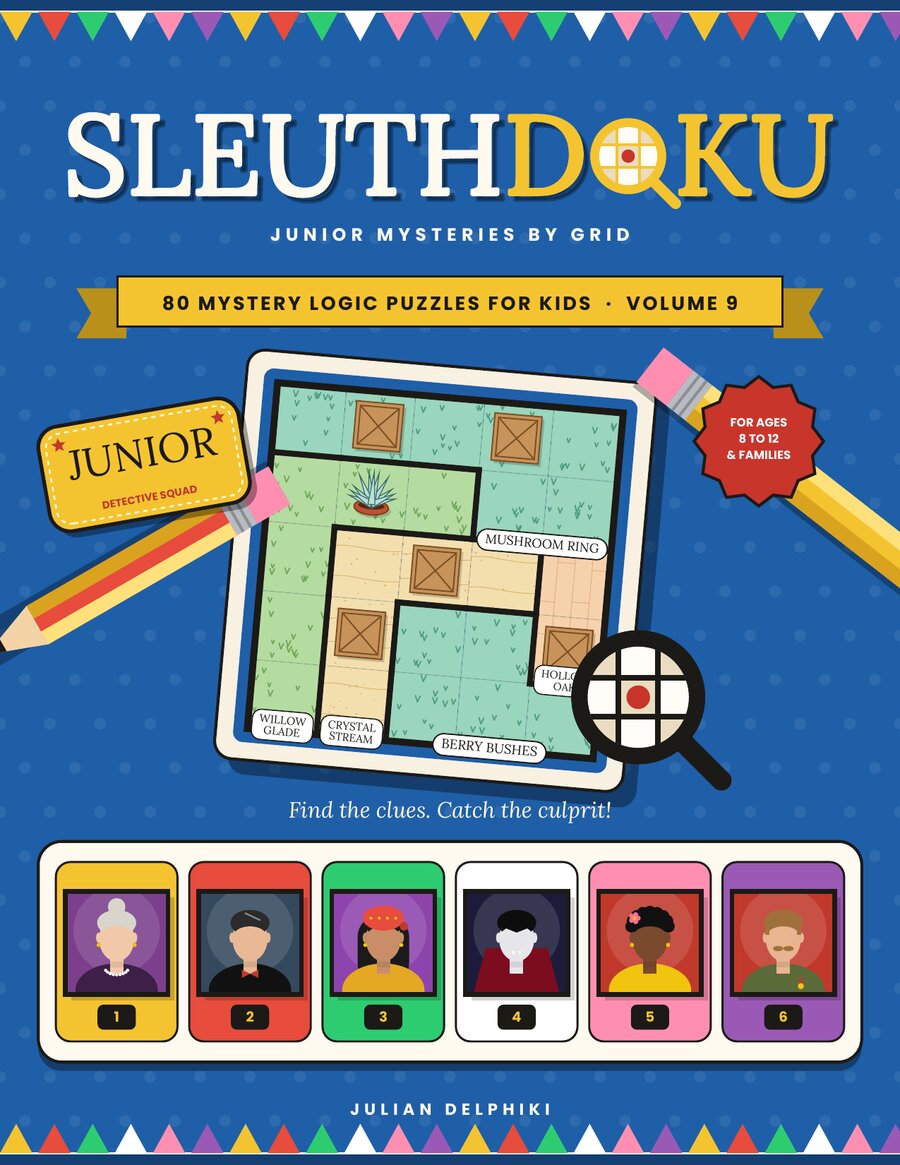
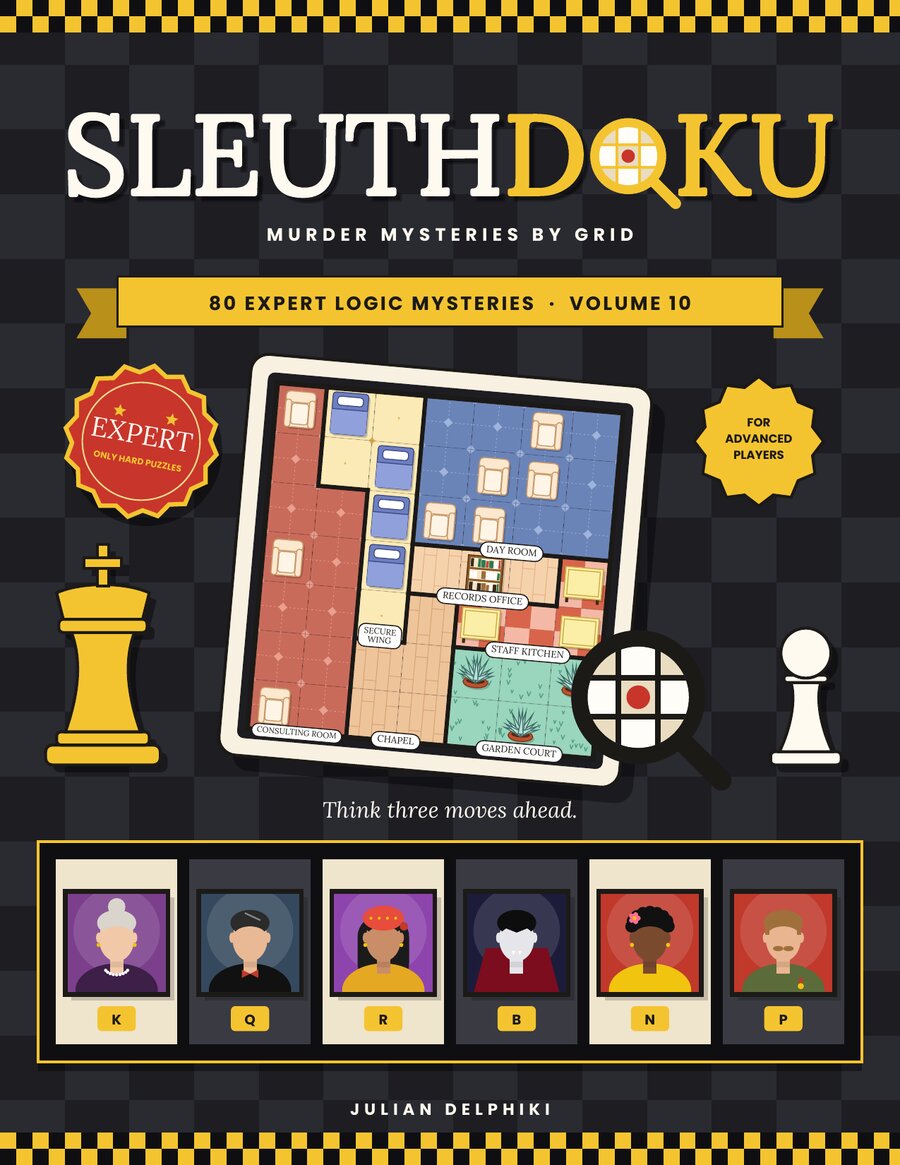
The gentle Rookie files in Sleuthdoku Volume 1 are perfect for building this reflex. Kids can practise it too in Sleuthdoku Junior, whose first chapter uses small maps. Later, on the big boards of Sleuthdoku Mastermind, the habit becomes essential.
Sudoku players know the same idea as removing candidates early. If you enjoy the theory, the sudoku solving techniques page explains how computers do it.
Next time you open a case, resist the urge to read the clues. Grab your pencil, cross out blocked squares, and only then start investigating.